Tennis String Tension Guide UK 2026: How to Choose the Right Tension
Few decisions affect how your racket plays as much as your tennis string tension, yet it's the setting most club players never think about. Get it right and you unlock more power, more spin, sharper control and noticeably better comfort. Get it wrong and even a £250 frame can feel dead, boardy or arm-wrecking. With Wimbledon fever sweeping the UK and courts busier than ever, now is the perfect moment to dial in your set-up. In this tennis string tension guide we'll explain exactly what tension does, how to choose the right number in pounds for your game, how string type changes the equation, and which strings and rackets from Central Sports will help you play your best tennis this season.
What Tennis String Tension Actually Means
String tension is simply the pulling force a stringer applies when fitting strings into your racket, measured in pounds (lbs) here in the UK, or occasionally kilograms. Most club and performance players sit somewhere between 45 and 60 lbs, with around 52 lbs acting as a handy dividing line. The principle is easy to remember: lower tension creates a softer, trampoline-like string bed that returns more energy to the ball, while higher tension creates a firmer bed that grips and controls the ball more precisely. Every racket has a recommended tension range printed on the frame, usually near the throat, and that range is your safe starting point. Stray too far outside it and you risk either an uncontrollable launch or, at the high end, extra stress on the frame and your arm. Understanding this trade-off is the foundation of choosing tension well.
Lower Tension vs Higher Tension: Power and Control
The central trade-off in any tennis string tension guide is power versus control. String at the lower end of your range — say 48 to 50 lbs — and the string bed flexes more on contact, acting like a springboard that adds free depth and pace. Lower tensions also let the strings move and snap back more, which can boost spin, and they're gentler on the elbow and shoulder. The cost is precision: big hitters may find the ball sails long. String at the higher end — 55 to 58 lbs — and the bed becomes stiffer and more predictable, reining in power and rewarding players who supply their own pace and want pinpoint placement. The catch is comfort and a smaller sweet spot. As a rule of thumb, if your shots fly long, add 2 lbs; if they drop short and you want more pop, drop 2 lbs. Small changes make a real difference.
How String Type Changes the Right Tension
Tension never works in isolation — the material in your racket matters just as much. Polyester (or "poly") strings are stiff and low-powered, so they're usually strung 3 to 5 lbs lower than other materials to recover some comfort and feel; many spin-focused players settle around 48 to 54 lbs. Be aware that polyester also loses tension fastest, often shedding 10 to 15% within the first 24 hours, which is why frequent players restring more often. Multifilament and synthetic gut strings are soft, elastic and naturally powerful, so they're typically strung tighter — often 52 to 60 lbs — to keep that power in check while preserving their arm-friendly cushioning. Natural gut behaves similarly. If you're chronically battling tennis elbow, a softer multifilament strung mid-range is the kindest combination. Browse the full string selection in our tennis collections to match material to your goals.
The Best String Tension for Your Playing Level
Your standard and style should steer your number. Beginners and improvers benefit from lower tensions, around 48 to 52 lbs, which add free power and forgiveness while you develop a consistent swing — a larger, livelier sweet spot makes the game more fun and less tiring. Intermediate club players are the sweet spot for experimentation: start in the middle of your frame's range (commonly 52 to 54 lbs), play a few sessions, then nudge up or down based on whether you crave control or power. Advanced and aggressive players who generate plenty of their own racket-head speed often go higher, 55 to 58 lbs, for the control to keep heavy shots inside the lines. Spin-heavy players using polyester are the exception, frequently dropping to 48 to 52 lbs to maximise string snap-back. Whatever your level, treat your first stringing as a baseline, not a final answer.
When to Restring and Why It Matters
Strings lose tension every day, whether you play or not, so a racket that felt perfect in spring can feel lifeless by mid-summer. The classic guideline is to restring as many times per year as you play per week — twice a week means roughly two restrings a year as a minimum. Competitive players and heavy poly users should go more often, because dead strings not only sap performance but also transmit more shock to the arm, raising the risk of tennis elbow. Look out for telltale signs: notched or frayed strings, a string bed that has lost its crispness, or strings that no longer snap back into place. If you're investing in a new frame, our Yonex Percept 100 (Free Restring) at £156.99 comes ready to string to your chosen tension — a smart way to start with a set-up tailored to you rather than a factory default.
Our Top String and Racket Picks from Central Sports
Here are five in-stock picks from Central Sports to help you nail your ideal tension, whatever your priority:
- Yonex Rexis Comfort 1.25mm (12m Pack) — £16.90. A plush multifilament that shines strung mid-to-high (52–58 lbs). The arm-friendly choice for anyone managing tennis elbow without sacrificing feel.
- Yonex Polytour Force 120 String Set — £22.00. A control-oriented polyester best strung lower (48–54 lbs) for spin and snap-back. Ideal for intermediate-to-advanced players who supply their own power.
- Wilson Revolve Spin 17 String Set — £9.00. A shaped, spin-friendly poly at an unbeatable price. Drop the tension a couple of pounds to unlock maximum bite on your topspin.
- Luxilon Element 125 String Set — £20.00. A softer "comfort poly" delivering control with less harshness than a standard polyester — a great middle ground strung around 50–54 lbs.
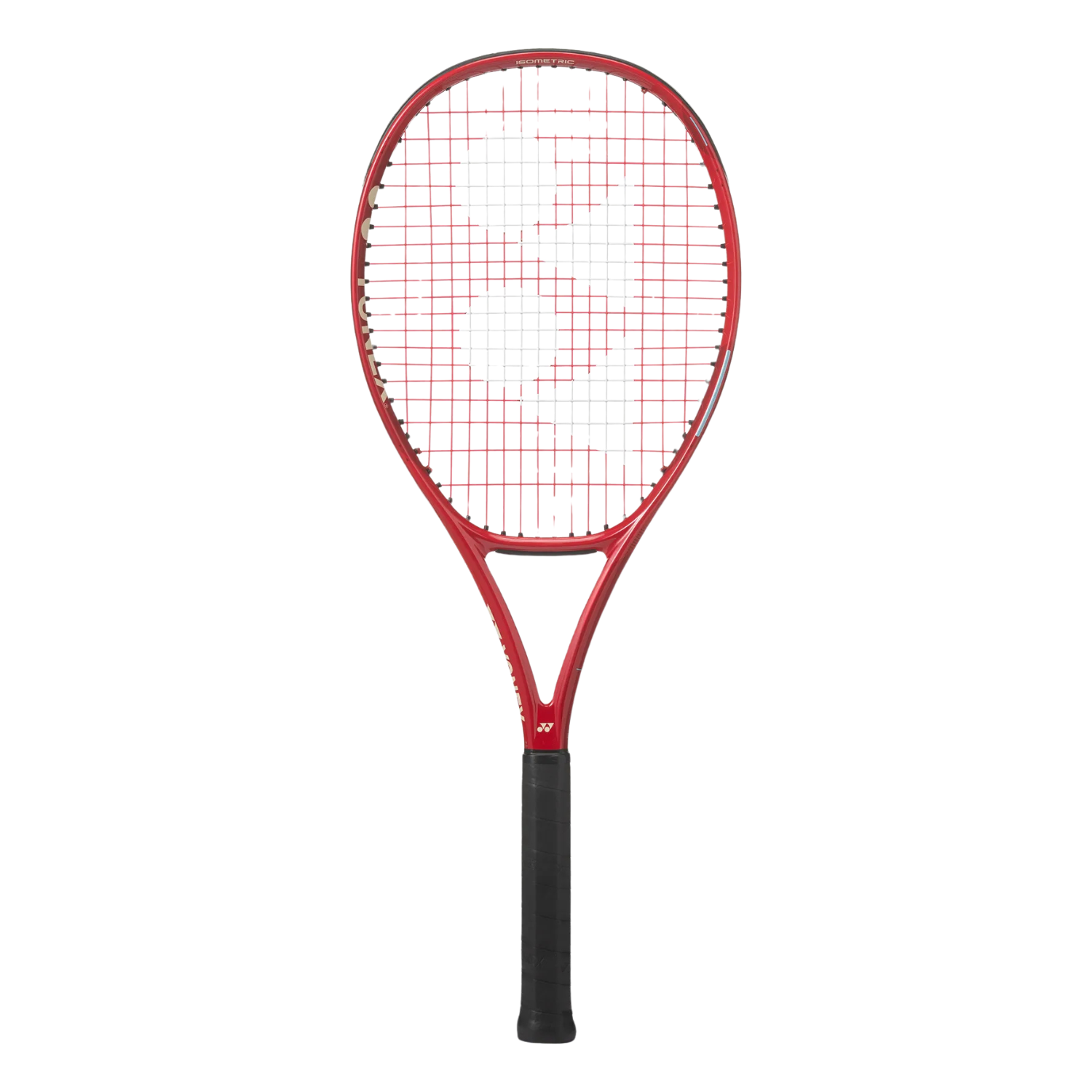
- Yonex Percept 100 300g (Free Restring) — £156.99. A control-focused 100in² frame for intermediate players, supplied unstrung with a free restring so you choose the exact tension from day one.
Conclusion: Dial In Your Tennis String Tension This Season
There's no single perfect number — the right tennis string tension is the one that matches your level, your style and the string in your frame. Start in the middle of your racket's range, factor in your string material (lower for poly, higher for multifilament), and adjust in 2 lb steps until your shots land where you want them with the comfort you need. Restring regularly so your set-up never goes stale, especially with a long UK summer of tennis ahead. When you're ready to experiment, explore the full range of strings, rackets and stringing services at centralsports.co.uk — and feel the difference the right tension makes in your very next match.