Padel and pickleball are the two fastest-growing racket sports in the UK, and they get confused constantly. Both are doubles-first, both use a stringless bat, both are gentler on the body than tennis. They are still completely different games.
Quick answer: the difference between padel and pickleball is the court. Padel is played inside a glass-walled cage about 10m x 20m, where the walls are in play and the ball rebounds off them. Pickleball is played on a small, open, badminton-sized court with no walls and a "kitchen" no-volley zone at the net. Padel uses a perforated solid bat and a depressurised tennis ball; pickleball uses a flat paddle and a hard plastic ball. Pickleball is cheaper and quicker to start; padel needs a booked court.
Below we break down the courts, the kit, the cost of starting each one in the UK, and which suits you — with honest guidance from the team at Central Sports, who sell and play both.
Padel vs pickleball at a glance
| Feature | Padel | Pickleball |
|---|---|---|
| Court | Enclosed, ~10m x 20m | Open, badminton-sized (~6.1m x 13.4m) |
| Walls | Glass and mesh, in play | None |
| Bat | Solid, perforated, foam core | Flat paddle, honeycomb core |
| Ball | Depressurised tennis ball | Hard perforated plastic |
| Serve | Underarm, bounce first | Underarm, below the waist |
| Format | Almost always doubles | Doubles or singles |
| Where to play | Booked club court | Any sports hall or marked court |
The court is the real difference
Everything else follows from the court. A padel court is a sealed box: glass at the back, mesh down the sides, and the ball stays live after it hits them. That single rule changes the sport. Points last longer, almost nothing is a clean winner, and the best players are the ones who read rebounds rather than the ones who hit hardest. It also means you cannot play padel casually — you need a purpose-built court, and in the UK that means booking a slot at a club.
Pickleball has no walls at all. The court is roughly the size of a badminton court, and the defining feature is the 2.13m non-volley zone either side of the net, universally called the kitchen. You may not volley while standing in it. That one rule stops the game becoming a smash-fest and turns the net exchange into a patient, soft-hands duel called the dink rally. Because the court is small and needs nothing more than lines and a net, pickleball can be set up in almost any sports hall — which is exactly why it has spread faster.
Bats, balls and how each game feels
A padel bat is a solid, perforated frame with an EVA or foam core and a carbon or fibreglass face. There are no strings. Shape matters: round bats are forgiving and control-biased, teardrop is a middle ground, and diamond is head-heavy and aimed at advanced players who want power. Weight usually sits between 350g and 385g. The ball is a tennis ball at lower pressure, so it sits up slightly more and rewards touch.
A pickleball paddle is flatter, lighter and considerably smaller — typically 200g to 250g, with a polymer honeycomb core and a carbon or composite face. Core thickness is the number to look at: 16mm cores are softer and more controlled, 13-14mm cores are punchier. The ball is rigid perforated plastic, and it is genuinely different to hit — it does not bite or spin like a tennis ball, so power matters far less than placement. Note that the two are not interchangeable. A padel bat is built for a tennis ball and wall play, and it will feel dead and clumsy against a plastic pickleball.
What it actually costs to start in the UK in 2026
This is the part most comparison guides skip, and it is usually the deciding factor. Pickleball is the cheaper entry by a clear margin. A capable beginner paddle starts around £38, a tube of balls is £4-£10, and many UK clubs run pay-and-play sessions for a few pounds with paddles you can borrow. You can be properly equipped for under £50.
Padel costs more on both sides. A decent beginner bat sits in the £60-£85 range, balls are £4-£7 a tube, and court hire is the real expense — expect roughly £30-£50 per court hour at a UK club, split between four players. Padel is not expensive per session once you split it, but you cannot avoid the court fee, and courts still get booked out weeks ahead in most cities.
One cost is identical for both: court shoes, not running shoes. Both are lateral, stop-start sports, and running shoes roll under you on a sharp change of direction.
Which should you play?
Choose pickleball if you want to start this week, keep the cost down, or play socially across a wide range of ages and fitness levels. It is the easiest racket sport to become competent at, and the small court means a real rally is possible in your first session.
Choose padel if you already play tennis or squash, want longer and more tactical points, and have a padel club within a sensible drive. Squash players adapt fastest, because reading a ball off a wall is already second nature.
On popularity, pickleball has more casual UK participants because it is easier to host, while padel has attracted more facility investment — the LTA now governs it and new courts open across the country every month. Most people who try one end up playing both. If you are also weighing up the third option, our padel vs tennis comparison guide covers that side of it.
Top picks from Central Sports
Everything below is in stock at centralsports.co.uk right now.
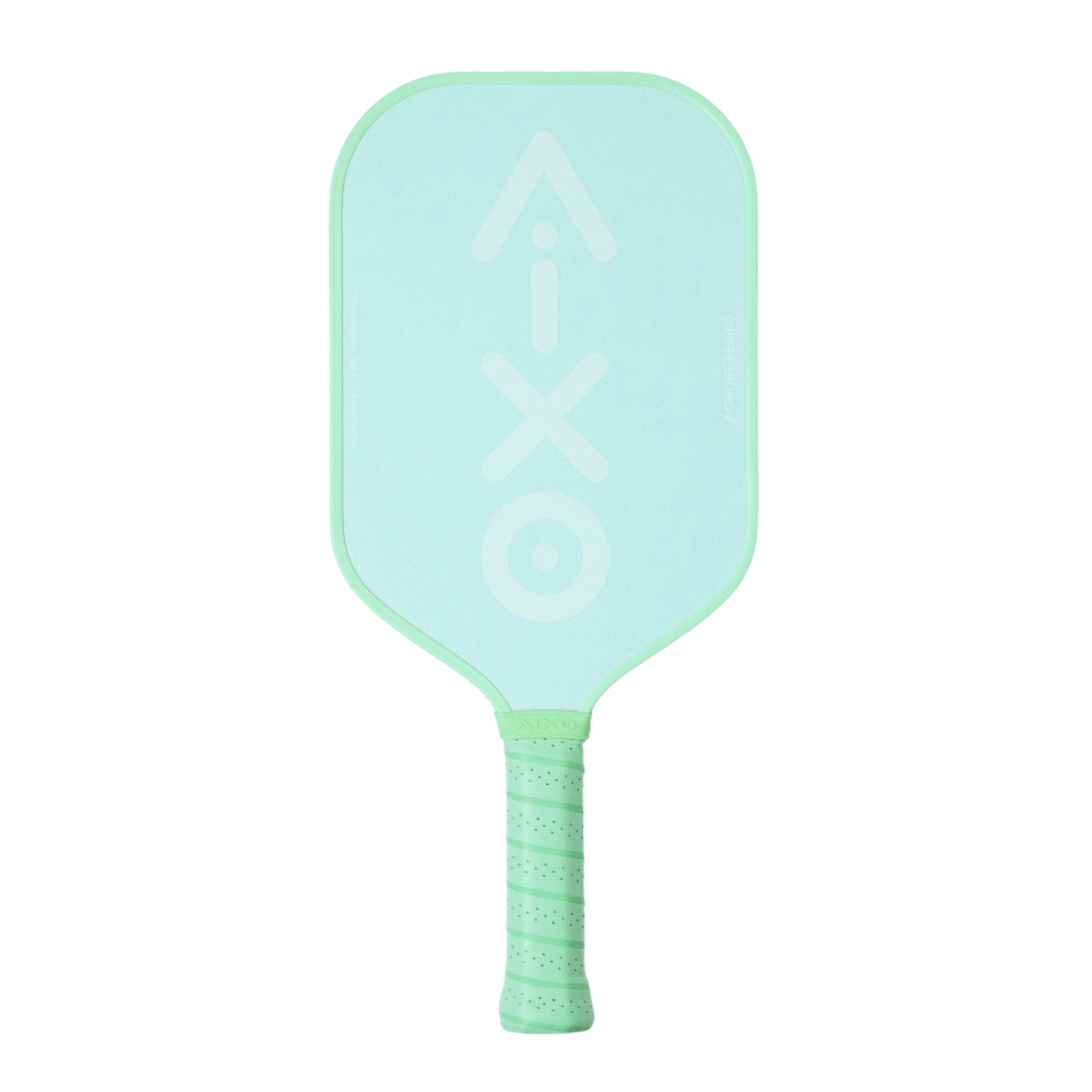
- Aixo CP03 Ghost Series Neotag T700 Carbon Pickleball Paddle — £38.00. Carbon face and honeycomb core at a genuine beginner price. The cheapest sensible way to find out whether pickleball is for you. See more beginner pickleball paddles.
- Wilson Tru 32 Indoor Pickleball Balls — £7.13. Indoor-spec balls with larger holes for sports-hall play, which is where most UK pickleball happens.
- Aixo Pastel de Mint Ghost Padel Racket, Full Carbon RL-B09 — £60.80. Full carbon at the bottom of the padel price range. A forgiving first bat that will not need replacing in a season.
- Aixo Country Club Padel Racket, 3K Carbon RL-B11 — £80.75. The step up once you are playing weekly and want more bite on the smash.
- Wilson Padel x3 Ball — £3.99. Match-spec padel balls. Browse the full padel ball range or the complete padel collection.
Padel vs pickleball FAQs
Is pickleball harder than padel? No. Pickleball is the easier of the two to learn. The court is smaller, the ball is slower and there are no walls to read, so most people can hold a rally in their first session. Padel takes longer because you have to learn to play the rebound off the glass.
Why is pickleball more popular than padel? Access and cost. Pickleball needs only a net and court markings, so any sports hall or tennis club can host it overnight, and a full kit costs under £50. Padel needs a purpose-built enclosed court costing tens of thousands to install, which caps how quickly it can spread.
Is padel or pickleball more popular in the UK? Both are growing quickly and the answer depends on how you measure it. Pickleball has more casual players because it is so easy to host. Padel attracts more club investment and new facilities, and is governed by the LTA. Padel has the higher profile; pickleball has the wider reach.
Can I use a padel bat for pickleball? No. A padel bat is thicker, heavier and built for a depressurised tennis ball against glass. Against a rigid plastic pickleball it feels dead and gives you no control. Use a purpose-built paddle for each sport.
What shoes do I need? Court shoes for both, not running shoes. Both sports are lateral and stop-start, and running shoes offer no side-to-side support. Padel courts are usually artificial grass, so a padel or clay-court outsole grips best; pickleball is played indoors on hard courts, where an all-court sole is right.
Ready to pick one?
Padel vs pickleball comes down to what you can actually get to. If there is a padel club near you and you like a tactical, longer point, padel is the richer game. If you want to start this weekend for under £50, pickleball wins. Either way, Central Sports stocks both properly — bats, paddles, balls and court shoes — with expert advice from people who play. Browse the padel range or the pickleball range, or read our guide to the best pickleball paddles for beginners to narrow it down.