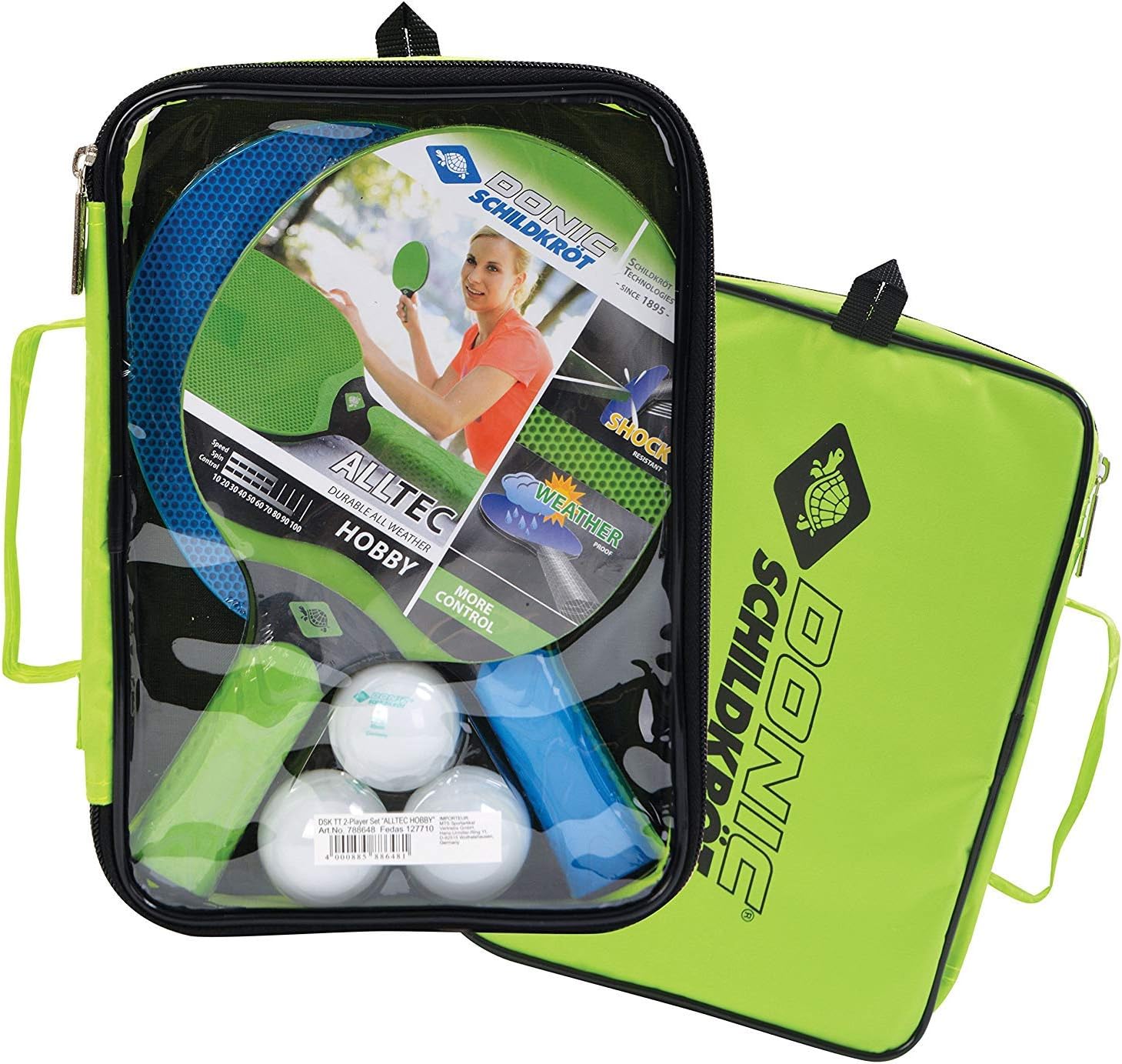
Quick answer: Modern table tennis balls are 40mm "40+" plastic balls. Star ratings indicate quality: 3-star balls are the roundest and most consistent and are used for matches, while 1-star and training balls are cheaper and ideal for practice, multiball drills and casual play. For club and league matches, use 3-star balls approved by the sport's world governing body.
A table tennis ball looks simple, but there is a surprising amount of variation in how they bounce, how long they last and what they cost. Here is what the markings on the box actually mean.
What does 40+ mean?
The official ball is 40mm in diameter and weighs 2.7g. The "+" was added when the sport switched from celluloid to plastic balls. The new plastic balls are very slightly larger than the old 40mm celluloid ones, so they were marked 40+ to show the difference.
Every ball we stock is a 40+ ball. If you find old celluloid balls in a cupboard, they will still work for a knock-about, but they bounce and spin a little differently and are no longer used in competition.
ABS plastic vs celluloid table tennis balls
Celluloid was the standard material for decades, but it is flammable and became difficult to manufacture and transport. Since the mid-2010s, competition balls have been made of plastic, often called "poly" balls. Many training balls are made from ABS plastic, a tough material that stands up well to heavy use.
Compared with old celluloid balls, plastic balls tend to produce slightly less spin and a slightly higher bounce. Most players adapt within a session or two.
Seamed vs seamless balls
Most plastic balls are made from two halves joined at a seam. Seamless balls are formed in one piece, which some players feel gives a more even bounce. Both types are used in play; the quality of manufacturing matters more than whether there is a seam.
What do the star ratings mean?
Stars are a quality grade given by the manufacturer. More stars means the balls have been made and selected to tighter tolerances for roundness, weight and wall thickness.
| Rating | Typical use | Pros | Cons |
|---|---|---|---|
| Training / bulk (no star) | Multiball drills, robots, schools | Very low cost per ball, sold in large boxes | Less consistent bounce |
| 1 star | Casual and recreational play, practice | Cheap, durable | Not for official matches |
| 2 star | Regular practice | Better consistency than 1 star | Less common now |
| 3 star | Matches, club leagues and serious training | Roundest, most consistent bounce; approved versions used in competition | Higher cost per ball |
For competition, the ball should be a 3-star ball that is approved by the world governing body and marked as such. The Donic-Schildkroet 3-Star Champion is one example.
Training balls vs match balls: which should you buy?
- Families and casual players: a pack of 1-star balls is ideal. They are cheap enough not to worry about the odd squashed ball.
- Coaches and schools: buy bulk training boxes of 120 or 144 balls for drills, then keep a few 3-star balls for matches.
- Club and league players: practise with the same 3-star balls your league uses so there are no surprises on match night.
White or orange?
Both are official colours. Choose the one that contrasts best with your surroundings: white shows up well against dark backgrounds, orange against light walls or in bright halls. Many players like a mixed pack for training.
Top picks from Central Sports
- Donic-Schildkroet 3-Star Champion ITTF Poly 40+ (3 pack), £3.30 at time of writing. Approved for tournament play.
- Donic-Schildkroet 3-Star Avantgarde Poly 40+ (6 pack), £3.42 at time of writing. Three white and three orange balls for serious training.
- Donic-Schildkroet 1-Star Elite White (3 pack), £1.00 at time of writing. Durable ABS balls for casual play.
- Donic-Schildkroet 1-Star Elite Orange (3 pack), £1.94 at time of writing. High-visibility orange for bright rooms.
- Donic-Schildkroet 1-T One Poly 40+ Training Box (120), £9.99 at time of writing. Bulk ABS balls for multiball and group coaching.
- Donic-Schildkroet Jade Poly 40+ Training Balls (144), £36.30 at time of writing. A large box for clubs and schools.
FAQs
What is the difference between 1-star and 3-star table tennis balls?
3-star balls are made to tighter tolerances, so they are rounder and bounce more consistently. 1-star balls are cheaper and fine for casual play and practice.
Are 40mm and 40+ table tennis balls the same?
Almost. 40+ plastic balls are very slightly larger than old 40mm celluloid balls. All current balls are 40+.
Can you fix a dented table tennis ball?
Small dents in older celluloid balls could sometimes be eased out with warm water, but plastic balls rarely recover properly. Once a ball is dented or cracked, replace it.
How long do table tennis balls last?
It varies with use and quality. Good plastic balls can last many sessions; replace any ball that cracks, dents or starts bouncing unevenly.
Stock up on practice packs and match balls in our table tennis balls collection, or browse our full table tennis range.
Related guides: How to Choose a Table Tennis Bat: Speed, Spin and Control Explained | Table Tennis Rules for Beginners: Scoring, Serving and Doubles