Quick answer: Padel is a racket sport played in doubles on an enclosed court roughly a third the size of a tennis court, surrounded by glass and mesh walls that stay in play. You serve underarm after bouncing the ball, score exactly like tennis (15, 30, 40, game), and rallies continue off the walls. It is easier to pick up than tennis, which is why it is the fastest-growing racket sport in the UK.
If you have walked past a glass box on a leisure centre car park in the last two years and wondered what on earth was going on inside it, this guide is for you. Below we cover what padel actually is, the rules in plain English, how scoring works, what the court looks like, what it costs to play in the UK, and the small amount of kit you genuinely need to turn up to your first session. No jargon, no assumed tennis background.
What is padel, exactly?
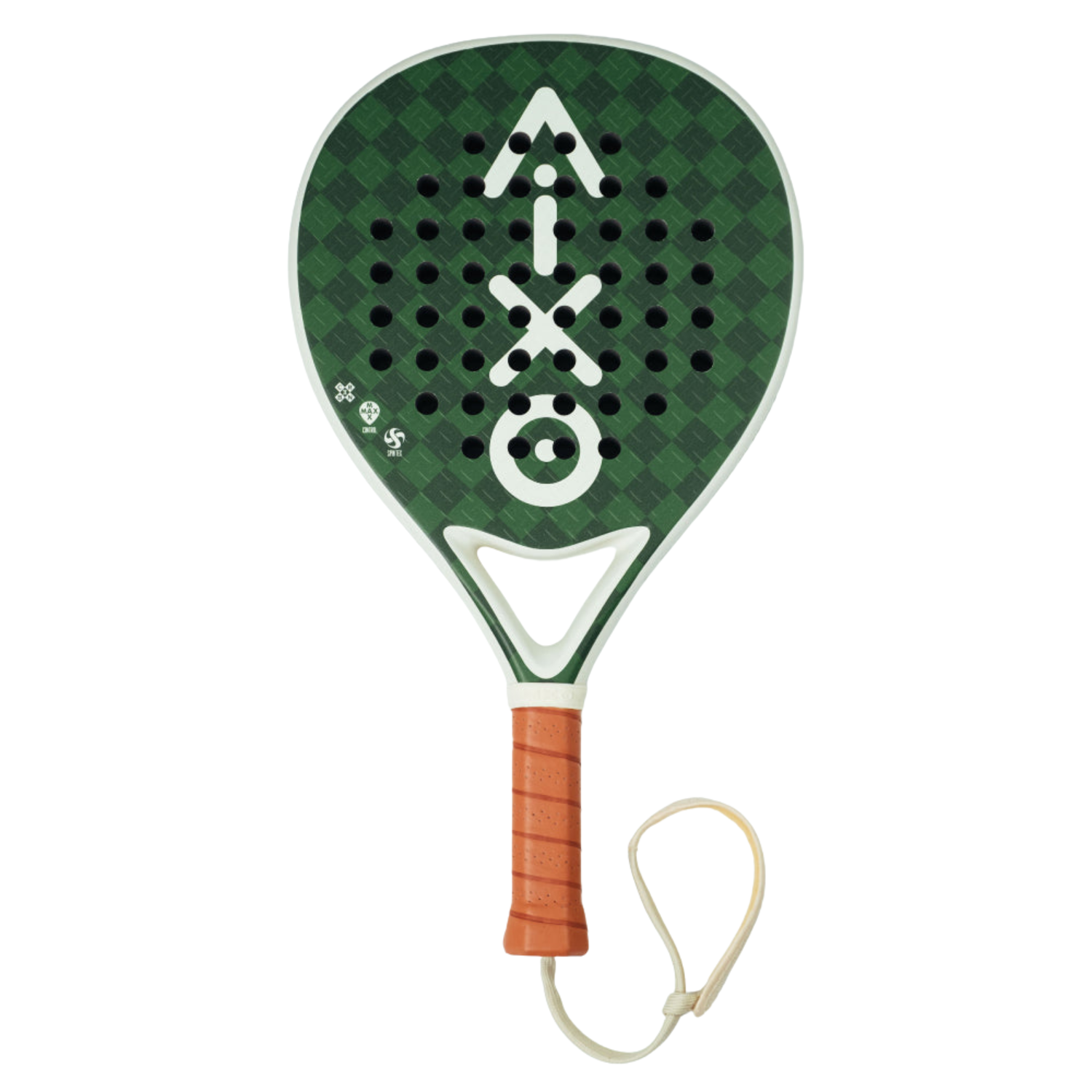
Padel is a racket sport invented in Mexico in 1969 and popularised across Spain and Argentina, where it is now second only to football in participation. It is played almost exclusively as doubles — two players a side — on a fully enclosed court. The racket is a solid, stringless bat with holes drilled through it, and the ball is a slightly lower-pressure version of a tennis ball.
The defining feature is the walls. Unlike tennis, the ball does not go dead when it reaches the back of the court. It can rebound off the glass and stay in play, which turns points that would have ended in tennis into long, tactical rallies. That single difference is why padel is so much friendlier to beginners: mishits get rescued by the glass instead of ending the point.
In Great Britain the sport is governed by the LTA, and court numbers have grown sharply as clubs convert underused tennis and netball space. At Central Sports we have watched padel go from a curiosity to one of our busiest categories in about three seasons.
Padel rules: how a point is actually played
The rules are short. Here is everything you need to walk on court:
- The serve is underarm. You bounce the ball on the floor once, then strike it at or below waist height. Overarm serving is not allowed.
- Serve diagonally. The ball must land in the service box diagonally opposite, as in tennis. You get two attempts.
- Walls are in play — after the floor. Once the ball has bounced on the floor on your side, it may hit your walls and you can still return it. What you cannot do is play a ball that hits your wall before it bounces on the floor.
- Your return must clear the net and bounce on their floor first. If your shot smacks straight into the opponents' glass or mesh without bouncing, you lose the point.
- You may use your own glass deliberately. Playing the ball into your own back wall so it loops over the net is a legitimate defensive shot, and it is one of the first things that makes padel feel different.
- You lose the point if the ball bounces twice, you hit it into the net, the ball hits you or your partner, or it leaves the court over the walls without bouncing in first.
Padel scoring explained
Padel scoring is identical to tennis, which makes it instantly familiar to a lot of British players. Points run 15, 30, 40, game. At 40–40 you play deuce and advantage. Six games wins a set, with a two-game margin, and a tiebreak is played at 6–6. Matches are usually best of three sets.
One variation you will meet quickly: many UK clubs and most competitive formats use the golden point. Instead of playing deuce and advantage, 40–40 becomes a single sudden-death point, and the receiving pair chooses which side receives it. It keeps social sessions moving and stops one game swallowing half your court booking.
The padel court: size, glass and cage
A padel court is 20 metres long by 10 metres wide, marked with a service line and a centre service line, and enclosed on all four sides. The back walls and the lower portion of the side walls are glass; the upper side sections are metal mesh. Both surfaces are live. The net sits at 88cm in the centre, rising to 92cm at the posts — slightly lower than a tennis net.
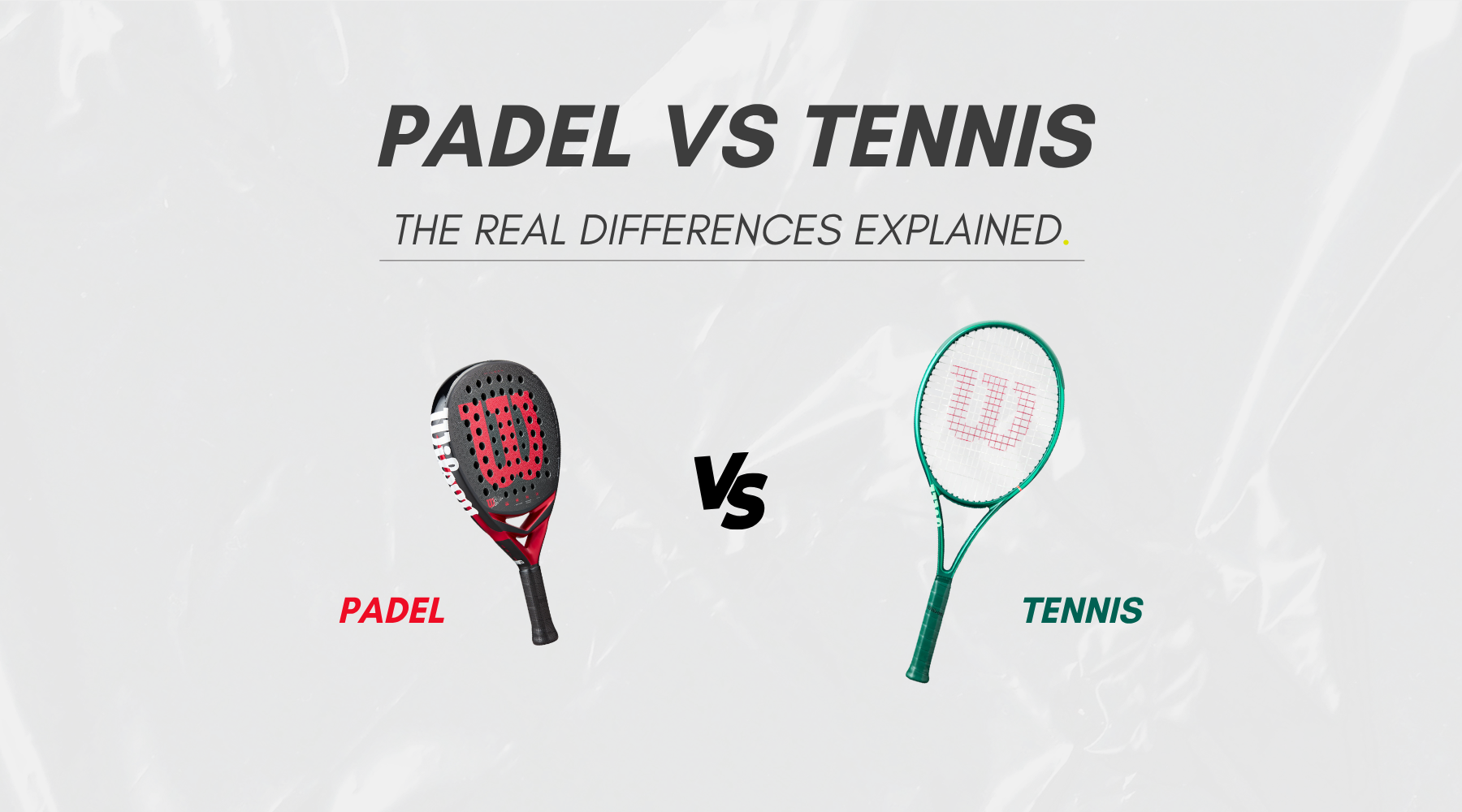
The court is about a third of the playing area of a tennis court, so you cover far less ground. It is a big reason padel suits players across a wide age range and why it is common to see mixed-ability fours having a genuinely competitive game — something that rarely happens in tennis. If you want the full side-by-side, we have written a detailed padel vs tennis comparison.
What kit do you need to start playing padel?
Less than you would expect. For a first session you need a racket, a tube of balls between the four of you, and non-marking court shoes. That is it.
The racket. Padel rackets come in three head shapes. Round heads put the sweet spot in the middle and are by far the most forgiving — this is what every beginner should buy. Teardrop is the middle ground. Diamond shifts the sweet spot high for power and punishes anything off-centre, so leave it alone until you have a season behind you. Weight matters too: 355–370g is a sensible beginner range. Browse the beginner padel racket range or the full padel racket collection.
The balls. Padel balls look like tennis balls but run at slightly lower pressure, which lowers the bounce and keeps rallies controllable. Tennis balls are not a substitute — they sit up too high off the glass. A three-pack from our padel balls range costs less than a coffee and lasts several sessions.
The shoes. Most UK padel courts are artificial turf with sand infill, and almost every venue requires non-marking soles. A herringbone or omni sole grips that surface properly; a running shoe will slide and will wreck your ankles. Our padel shoes are built for exactly this.
Where to play padel in the UK, and what it costs
This is the part most guides skip. Padel courts in the UK are typically booked by the hour and commonly cost somewhere in the region of £20–£40 per court, which split four ways works out at roughly £5–£10 each — usually cheaper than a gym class. Many clubs rent rackets for a few pounds so you can try the sport before buying, and most run beginner padel taster sessions that pair you up if you do not have three friends to bring.
The LTA maintains a court finder, and a growing number of dedicated padel venues have opened in and around Cardiff and South Wales. Turn up in normal sports clothing, bring water, and expect to be sweating more than you predicted within ten minutes.
Top picks from Central Sports
Everything below is in stock at centralsports.co.uk and chosen specifically for someone playing their first few games.
- Wilson Optix XP Padel Kit Box — £75.05. Racket and balls boxed together. If you want one thing in the basket and nothing else to think about, this is it.
- Adidas Match Light 2026 Padel Racket — £55.58. The lightest sensible way into the sport. Easy to swing, easy to react with at the net, and the cheapest frame here.
- Wilson Optix V1 Padel Racket — £57.00. Round head, generous sweet spot, forgiving on mishits — exactly the shape a beginner should be holding.
- Wilson Padel x3 Ball — £3.99. Proper padel pressure at pocket-money money. Buy two tubes and stop borrowing.
- Wilson Hurakn Lite Padel Shoe — £55.58. Non-marking sole built for sand-dressed artificial turf, and light enough not to feel like a commitment.
Ready to spend a bit more time on the racket decision? Our best padel rackets for beginners guide goes deeper on shape, weight and balance.
Frequently asked questions
Why is padel so popular now?
Because it is unusually easy to enjoy on day one. The walls keep rallies alive, the court is small, the serve is underarm, and doubles means you are never covering the whole court. Beginners have fun immediately instead of spending six months learning to keep a ball in play — and clubs can fit two or three padel courts into the footprint of one tennis court.
What is padel called in English?
Padel is the English name. It is sometimes written padel tennis, which is fine informally, but it is a separate sport from American paddle tennis and from platform tennis. It is also completely unrelated to pickleball, despite the two often being mentioned together.
Is padel for older people?
No — but it is unusually good for players who want competitive racket sport without the running load of tennis. The smaller court and underarm serve reduce the physical demands, which is why padel clubs commonly have players in their twenties and their sixties in the same four. It is a sport you can keep playing, not a sport for retirement.
Is padel harder than tennis?
Padel is significantly easier to start and arguably harder to master. Getting a rally going takes minutes rather than months. But playing the glass well, controlling the lob and knowing when to attack the net takes real time, and the top level is fiercely technical.
Can I use a tennis racket to play padel?
No. Padel rackets are solid, stringless, perforated and under 45.5cm long, and the rules require one. Most venues hire rackets out for a few pounds if you want to try before buying.
Ready to play?
Padel takes about ten minutes to understand and one session to get hooked on. Book a court, borrow or buy a forgiving round-head racket, grab a tube of balls and wear something with a non-marking sole. When you are ready to buy properly, the full padel range at Central Sports covers rackets, balls, shoes and bags, with expert advice from a team that plays the sport.