Padel marketing loves carbon numbers. 3K! 12K! 18K! But what do face materials actually change when the ball hits the racket? Here is the plain-English version we give customers at the wall.
Fiberglass: soft, friendly, affordable
Fiberglass faces flex more on impact — the ball sinks in and springs out. That means easy power on slower swings, comfort for the arm and a lower price. The trade-offs: less precision at high swing speeds, and faces soften noticeably after a season or two of hard play. Perfect for beginners and social players — browse fiberglass padel rackets.
Carbon: stiff, precise, durable
Carbon faces deform less, so the energy you put in comes out where you aimed it. Faster swings get more from carbon; slower swings can find it unforgiving. It also keeps its playing character far longer than fiberglass. See the carbon fibre collection.
What do 3K, 12K and 18K mean?
The K number is how many thousand filaments make up each carbon tow in the weave. In practice:
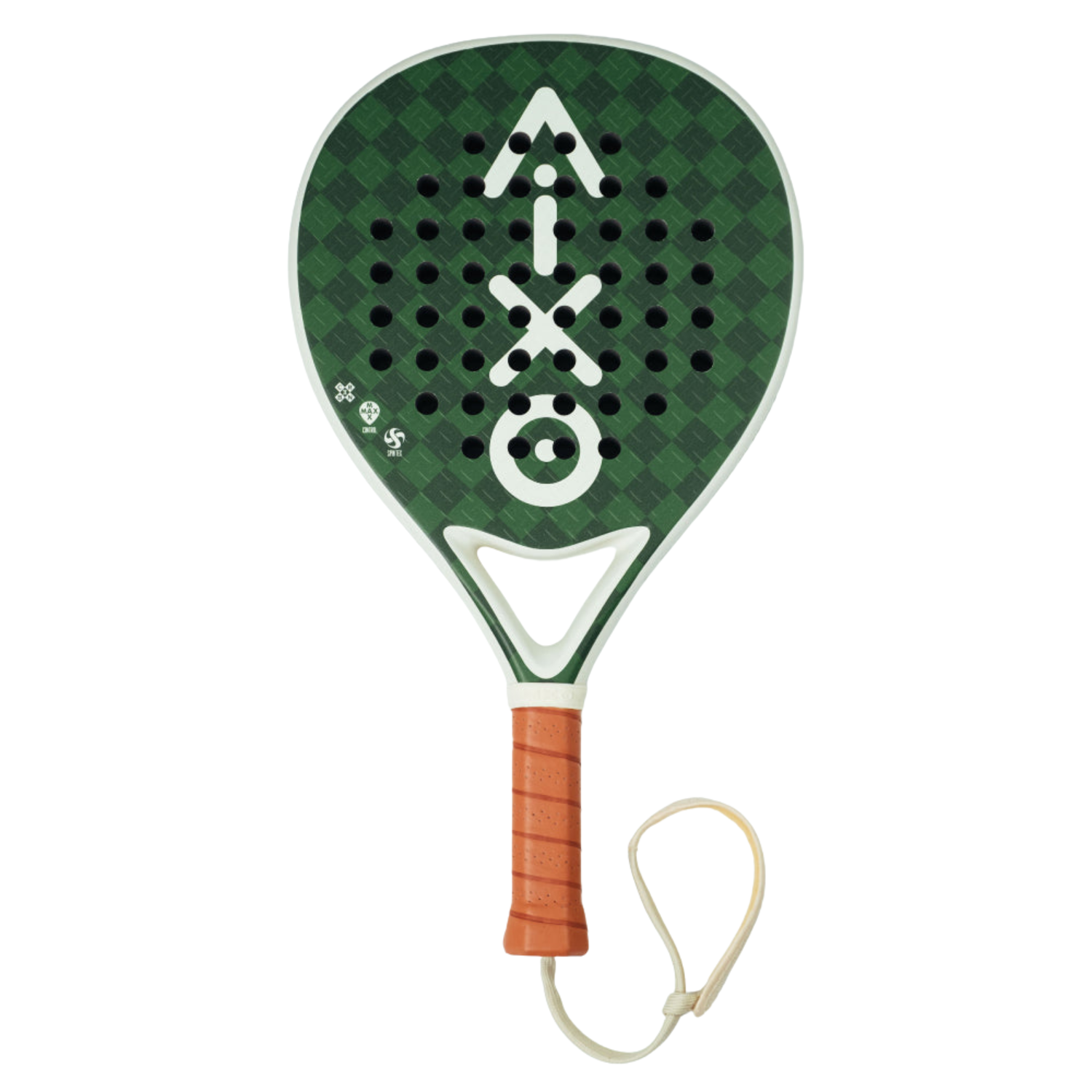
- 3K — coarser weave, marginally softer and more tolerant feel. Great first carbon, e.g. the Aixo Country Club.
- 12K — tighter weave, firmer response. The club-player sweet spot.
- 18K — very tight weave, maximum face stability for hard hitters — e.g. the Aixo Neotag 18K.
Honest caveat: the difference between K counts is smaller than the difference between the underlying foam cores. A soft-core 18K can feel friendlier than a hard-core fiberglass racket. Judge the whole racket, not the weave number.
Hybrids
Some frames mix fiberglass and carbon layers to split the difference — see hybrid padel rackets. Good compromise for improvers who find full carbon harsh.
Quick decision guide
- First season: fiberglass or 3K carbon
- Improving club player: 3K–12K carbon, teardrop shape
- Hard-hitting competitor: 12K–18K carbon, browse competitive padel
- Elbow concerns: fiberglass or hybrid, soft core, whatever the level
FAQs
Do carbon rackets give more power?
At high swing speeds, yes. At beginner swing speeds, fiberglass's flex actually returns more — material follows technique.
How long does each face last?
Club use: fiberglass faces soften in 1–2 seasons; carbon holds 2–3+. Cracks from glass-wall clips end either instantly.
Is 18K carbon worth it for club players?
Usually not — 12K delivers nearly all the stability at a friendlier price and feel. 18K earns its money in fast attacking games.
Feel the difference yourself — the full padel racket range is in store to swing.