Non-Marking Shoes Explained: The UK Court and Sports Hall Guide
Quick answer: Non-marking shoes have soles made from softer, lighter-coloured rubber that will not leave black scuff lines on an indoor sports floor. Most UK sports halls, leisure centres and school gyms require them, and almost every purpose-built badminton, squash and indoor court shoe already has one. A dark rubber outdoor running sole will usually mark, which is why venues turn players away at the door.
If your club, school or leisure centre has told you to turn up in non-marking shoes, you are probably wondering whether the trainers in your bag will pass. It is one of the most common questions we get at Central Sports, and it matters more than most players think: the shoe that keeps a floor clean is usually also the shoe that keeps your ankles intact.
What does non-marking actually mean?
A non-marking sole uses a rubber compound that is softer and contains little or no carbon black, the additive that makes most outdoor soles hard and very dark. Carbon-loaded rubber is abrasive: when you stop, pivot or lunge on a sealed indoor floor, tiny amounts shear off and smear across the surface as a black line. Softer gum or translucent rubber deforms instead of shearing, so it grips without leaving a deposit.
You will see non-marking soles in gum brown, translucent amber, white or pale grey. Colour is a strong clue but not a guarantee, because some manufacturers now tint non-marking compounds darker for looks. The compound is what counts, not the shade.
The trade-off is deliberate: non-marking rubber wears out faster on tarmac. That is the main reason court shoes should stay in your bag rather than being worn to the venue.
How to check the shoes you already own
- Check the label or box. Manufacturers advertise it. Look for "non-marking", "indoor", "gum sole" or a court-shoe designation on the tongue label or product page.
- The paper test. Press the sole firmly onto clean white paper on a hard floor and twist. A grey or black smear means the sole marks. This is the test most UK duty managers accept.
- Look at the wear pattern. A sole already black and glazed from outdoor use will transfer dirt even if the compound is non-marking. A clean sole is part of the requirement, not just the right rubber.
If in doubt, assume they mark. Venues are strictest in September and January, when new club and school terms start and floors have just been resealed.
Why UK sports halls enforce the rule
Most British sports halls are laid with sprung or sealed timber, or a poured polyurethane surface. Both are expensive and maintained on a cycle of cleaning, resealing and eventual resanding. Scuff marks are not simply untidy: removing them needs aggressive cleaning that shortens the life of the seal, and resanding a full-size hall runs into thousands of pounds.
There is a safety argument too. Transferred rubber and outdoor grit make a floor unpredictable, with grippy patches next to slick ones. That is exactly the condition that causes the ankle rolls badminton and squash players fear. The rule protects the floor, but it also protects you.
School gyms are the strictest of all, worth knowing if you are kitting out a child for a new term. Central Sports supplies sports kit to schools across South Wales and the wider UK, and non-marking indoor footwear is one of the most common items on a September kit list.
The mistake almost everyone makes
Passing the paper test only tells you a shoe will not damage the floor. It says nothing about whether the shoe is right for the sport, and this is the part other guides skip.
Plenty of gym trainers, skate shoes and plimsolls have gum soles and are genuinely non-marking. They are still a poor choice for badminton, because badminton is played almost entirely sideways. The sport demands rapid lateral pushes, split steps and lunges to the net. A running shoe is built to do the opposite: a raised, cushioned heel and a narrow, soft midsole tuned for straight-line motion. Put that under a sharp sideways load and the foot rolls over the edge of the platform.
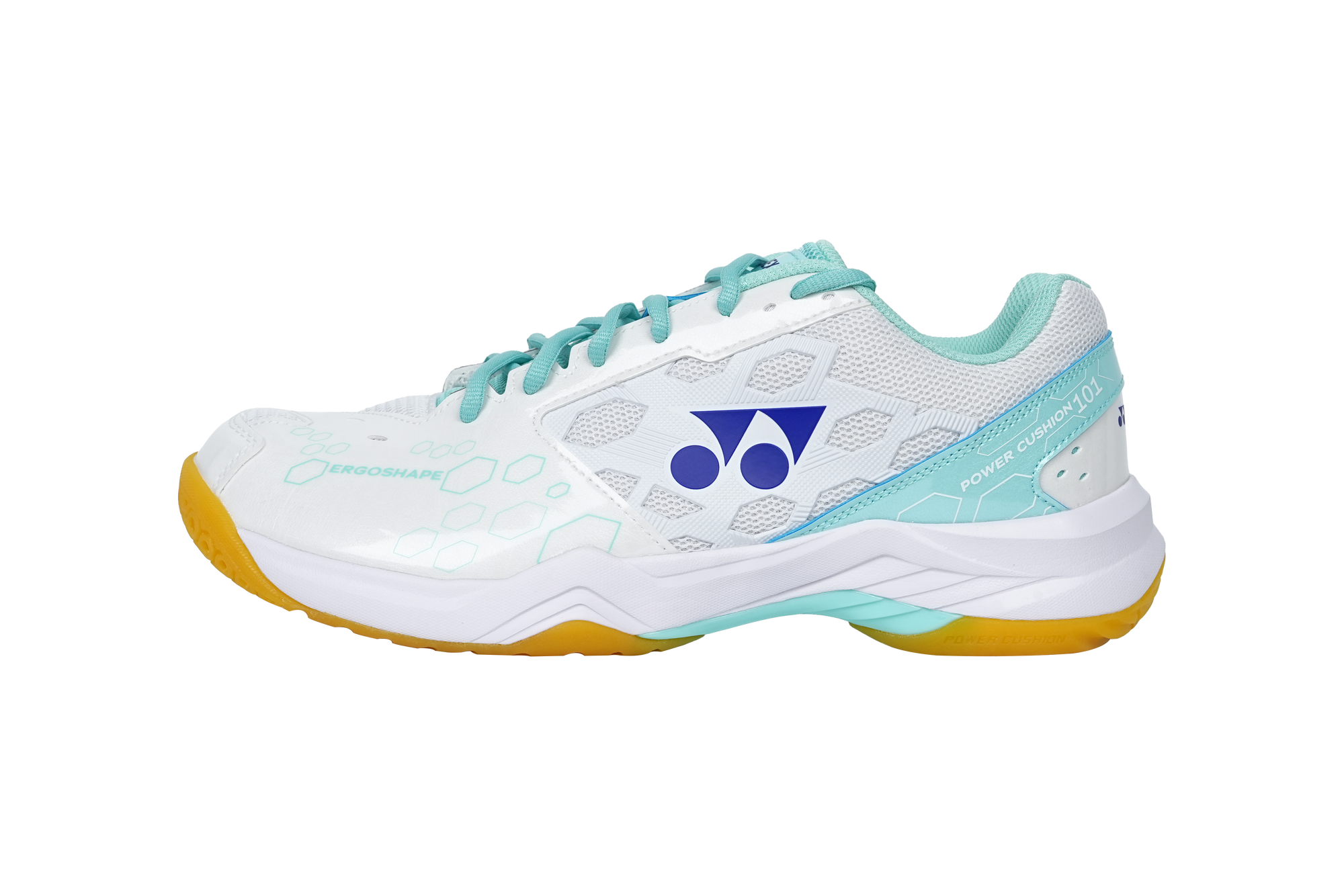
A proper indoor court shoe answers this with a low, flat profile, a reinforced medial and lateral upper, and cushioning concentrated under the forefoot where a badminton player actually lands. So the honest rule is this: non-marking is the minimum standard for getting on court; a court-specific shoe is the standard for playing well and staying fit. Our best badminton shoes guide for 2026 compares the current range, and the badminton shoe finder narrows it by fit and playing level.
Top picks from Central Sports
Every pair below has a non-marking sole, is in stock at centralsports.co.uk today, and suits a different budget or player.
- Yonex Power Cushion Strider Flow Junior - £38.00. The cheapest genuine court shoe we stock, and the right answer for a school PE kit list or a junior club night.
- Puma Varion 3 Unisex - £42.75. A well-priced entry into proper indoor footwear for anyone just told their running trainers will not do.
- Babolat Shadow Team 2 Men - £47.50. A durable multi-sport indoor shoe that works for badminton and squash, so it suits players who use the hall for both.
- Yonex Power Cushion Cascade Drive 2 Unisex - £55.10. Yonex Power Cushion damping at a mid-range price: the sensible once-a-week club shoe.
- Yonex Power Cushion 65X4 Unisex - £68.40. The benchmark all-round badminton shoe in UK league play, with the lateral stability regular competitors need.
Browse by fit: men's badminton shoes, women's badminton shoes, junior badminton shoes, or the full Yonex badminton shoe collection.
Looking after a non-marking sole
Treat court shoes as indoor-only and change at the door. Wipe the sole with a damp cloth before you play, since dust causes most slipping complaints, and dry them naturally rather than on a radiator, which hardens the rubber. A pair worn twice a week typically needs replacing every nine to twelve months, well before the upper looks worn out.
Frequently asked questions
What do non-marking shoes mean?
Shoes with a soft, low-carbon rubber outsole that grips an indoor floor without leaving black scuff marks. They are standard for badminton, squash, indoor tennis, netball, pickleball and most sports hall activities.
How do I check if I have non-marking shoes?
Press the sole onto clean white paper and twist firmly. No grey or black smear means the sole is non-marking. Also check the label for "non-marking" or "indoor", and make sure the sole is clean.
Can you run with non-marking shoes?
You can, but not habitually. The soft compound wears quickly on tarmac and concrete, and court shoes lack the heel cushioning distance running needs. You will ruin the grip and get poor support.
Can you wear any shoes for badminton?
No. Most venues require non-marking soles, and badminton's sideways movement needs a low, laterally supportive court shoe. Running trainers are the most common cause of ankle injuries among new players.
The bottom line
Non-marking shoes are about a rubber compound, not a brand or a price tag, and a thirty-second paper test settles any argument at the door. But treat it as the floor, not the ceiling: if you play badminton or squash more than occasionally, a purpose-built court shoe protects the venue and your joints at the same time. If you are unsure which is right for you, the team at Central Sports fits players in store and online every week.