Walk into a shop and the rackets look interchangeable — a frame, some string, a grip. They aren't. Four specifications decide whether a racket suits your game: weight, balance, flex, and grip size. Understand those and you can read any racket's spec sheet and know how it will play before you swing it. This guide, from the Central Sports team — official retailer of the Yonex All England Championships — walks through each one.
Start with the honest question: your level and style
Before any spec, be truthful about how developed your swing is and whether you play to attack or defend. A beginner who buys a stiff, head-heavy pro racket because a county player uses one will play worse, not better — the frame demands a swing they don't yet have. The best racket matches where your game is now, not where you want it to be. That is the most common and most expensive buying mistake.
Weight (the “U” rating)
Weight runs on a counter-intuitive scale: the higher the U number, the lighter the racket. 3U (85–89 g) is heavier with more mass behind the shuttle for powerful smashes, suiting stronger, attacking and singles players. 4U (80–84 g) is the modern all-round standard — lighter, faster to swing, easier on the arm, and the most popular choice for doubles. 5U/6U (70–79 g) is very light and quick for fast doubles and juniors. If in doubt, 4U is the safe choice.
Balance: where the weight sits
Two rackets of the same weight can feel completely different depending on where the mass sits. Head-heavy adds momentum for power on smashes and clears, suiting attacking singles players. Head-light is fast and easy to whip for net play and defence, favoured by doubles players. Even balance is the versatile middle ground and a strong pick for improvers who haven't settled on a style.
Flex (shaft stiffness)
The shaft whips the shuttle forward on contact, and its stiffness must match your swing speed. A flexible shaft bends easily and returns energy for you, generating power from a slower, shorter swing — best for beginners. Medium flex suits most improving club players. A stiff shaft returns energy only to a fast, well-timed swing, giving precision to advanced players but robbing a slower swing of power. The pairing to remember: slow swing → flexible shaft; fast swing → stiff shaft.
Grip size (the “G” rating)
Grip runs from about G4 (larger) to G6 (smaller); a higher number means smaller. It matters less than the specs above because you can always build a grip up with an overgrip, but you can't easily make one smaller. When unsure, size down and build up.
Quick recommendations
Complete beginner: 4U, even or slightly head-light, flexible shaft. Improving club player: 4U, even balance, medium flex. Attacking singles player: 3U/4U, head-heavy, medium-to-stiff flex. Doubles / defensive player: 4U/5U, head-light, medium flex. Explore the full range at Badminton Rackets, all with free expert restringing.
Don't forget the string — it's half the racket
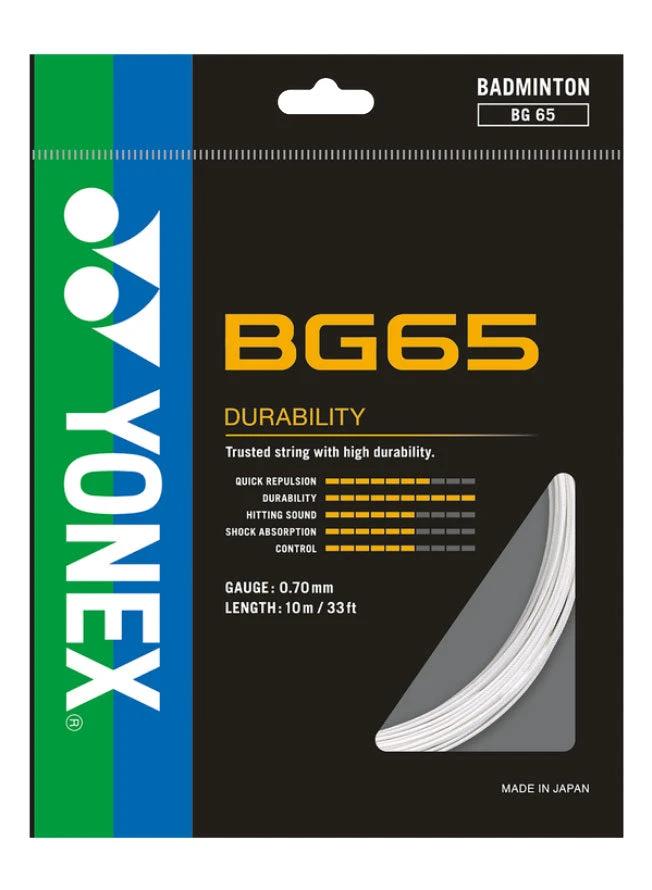
A new frame strung with dead factory string plays like a compromise. Whatever racket you choose, the string and tension shape how it performs on every shot. Match them properly with our Badminton String & Tension Guide, or have our team string your new racket to your spec.
Frequently asked questions
What is the best badminton racket for a beginner? A 4U, even or head-light frame with a flexible shaft — fast to swing, easy on the arm, and it generates power for you while your technique develops.
Does 3U or 4U mean heavier? 3U is heavier (85–89 g); 4U is lighter (80–84 g). The higher the U number, the lighter the racket.
Is head-heavy or head-light better? Neither — head-heavy adds smash power for attacking singles players; head-light adds speed for doubles and defence; even balance is the versatile middle ground.