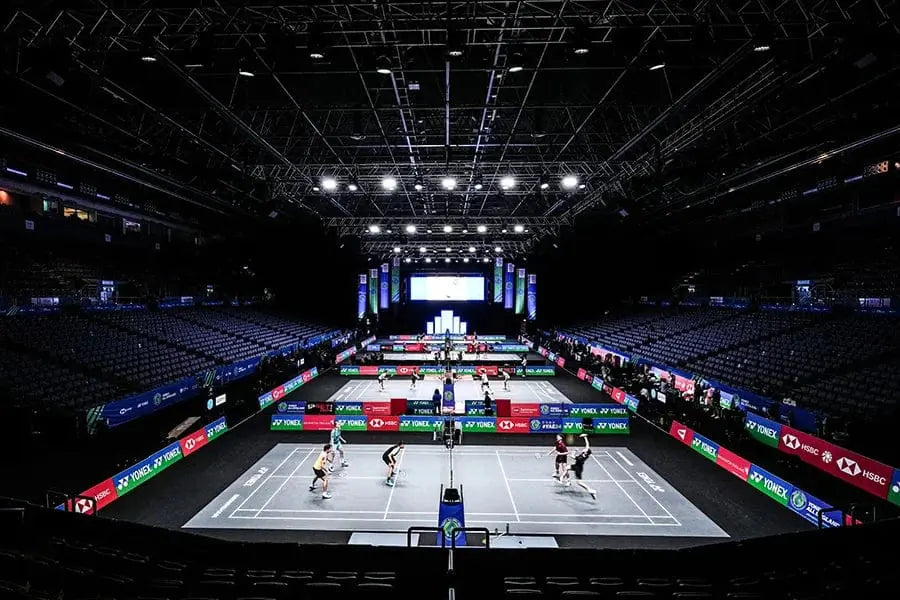
Walk into any leisure-centre badminton session and half the court is wearing running trainers. As the UK's badminton specialists — and the shop that ranks number one for badminton shoes for good reason — we need to say it plainly: running shoes on court are an injury waiting to happen.
Running shoes are built to go forwards
A running shoe is engineered for repeated heel-to-toe motion in one direction: raised heels, soft longitudinal cushioning, and outsoles that grip tarmac. Badminton is the opposite — explosive lunges, lateral pushes, jumps and instant direction changes. Put a raised, soft heel through a deep badminton lunge and you get ankle rolls; put a road outsole on a dusty sports-hall floor and you get slides at full stretch.
What court shoes do differently
- Low profile — your foot sits close to the floor, massively reducing ankle-roll leverage.
- Gum-rubber soles — engineered to grip wooden and synthetic hall floors, not pavement.
- Lateral support — reinforced sidewalls resist the sideways forces running shoes ignore.
- Shock-absorbing forefoot — badminton lands on the forefoot, exactly where running shoes are thinnest.
What we recommend
The Yonex Power Cushion 65X4 is the definitive club all-rounder — wide-friendly fit, superb cushioning, honest price. The step-up 65Z4 adds a snugger, faster fit for competitive players. Both use Yonex's Power Cushion midsole, which returns energy on the forefoot where badminton actually lives. Browse men's, women's and all badminton shoes.
Look after them
Court shoes should only be worn indoors — one walk across a car park embeds grit that ruins hall grip. Carry them in your bag and change at the hall; every serious player does.
FAQs
Can I use indoor football or gym trainers?
Gym trainers lack lateral support; futsal shoes are closer but still miss the forefoot cushioning. Proper badminton or indoor court shoes are the only correct answer.
How long do badminton shoes last?
Roughly 12 months of twice-weekly play, or when the gum sole goes shiny and the midsole stops rebounding. Grip fading is your signal.
Are badminton and squash shoes the same?
Very similar — both are indoor court shoes. Badminton-specific models put more cushioning in the forefoot for lunging and jumping.
Get fitted in store, or shop the full badminton shoe range — including junior sizes.