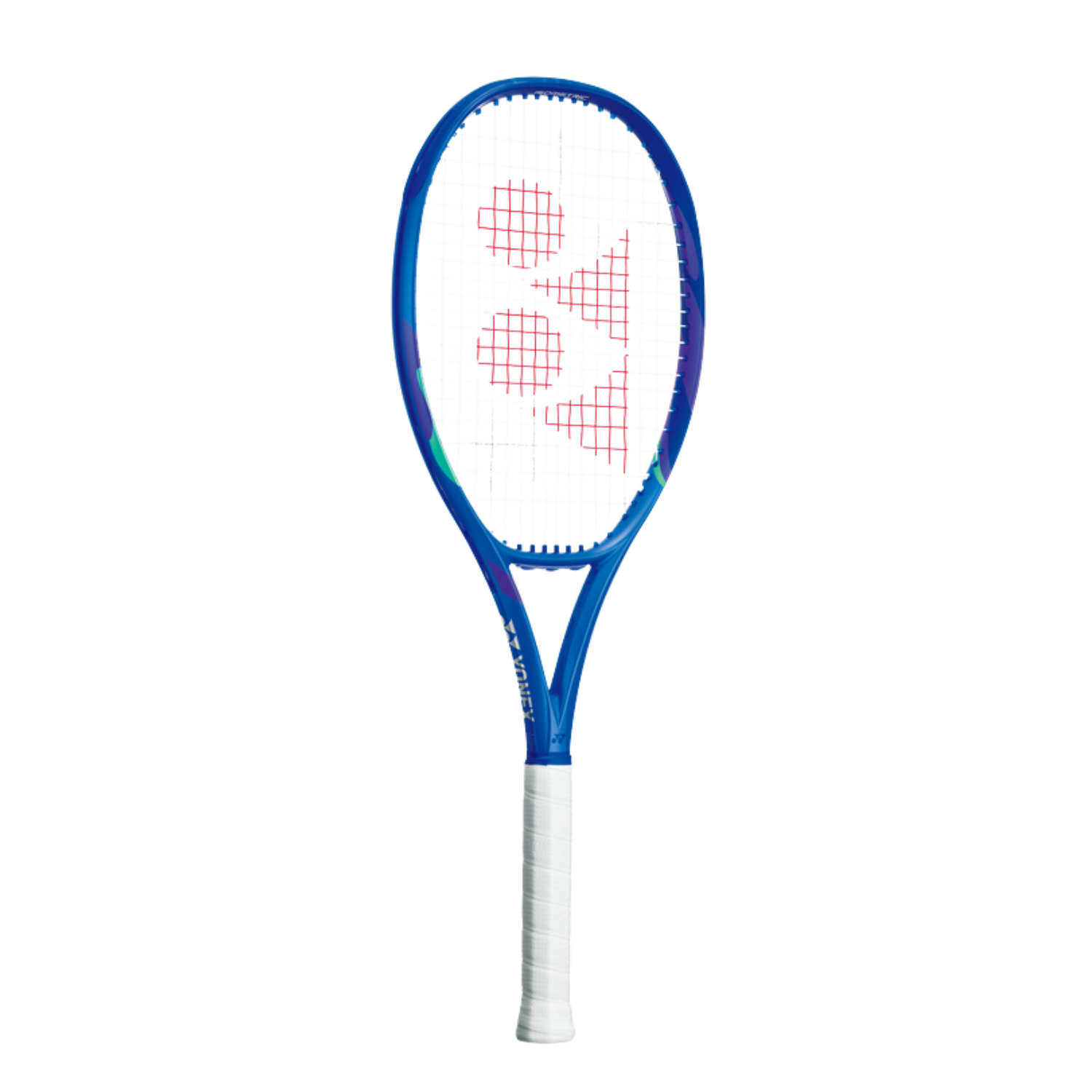
Quick answer: a bigger head gives you a bigger sweet spot, more power and more forgiveness on off-centre hits. A smaller head gives you more precision, better feel and finer control — at the cost of forgiveness. Most club players are best served by a midplus frame in the middle of the range.
The three head size categories
- Midsize (85–97 sq in): the smallest modern head sizes. Smaller sweet spot, but rewards a clean, technically sound swing with precision and feedback. Favoured by advanced and touch-oriented players.
- Midplus (98–105 sq in): the most common category on the market. A workable balance of control and forgiveness that suits the majority of club and improving players.
- Oversize (106–135 sq in): the largest sweet spot and the most inherent power and forgiveness. Popular with beginners, players returning to the game, and some seniors prioritising ease of play over precision.
Why head size changes how a racket plays
A larger stringbed flexes more on contact, acting like a bigger trampoline — the ball spends fractionally longer on the strings, which adds free power and can help generate spin, especially for players who do not yet swing fast enough to generate their own pace. A smaller head flexes less, giving a more solid, precise feel but demanding more accurate contact to access the same power.
Head size and control are not opposites — they trade off
It is tempting to think "small head = control, big head = power" as a strict rule, but the real trade-off is forgiveness versus precision. A well-struck ball off a 110 sq in frame can still be very controlled; the difference shows up on mishits, where the larger head is more forgiving and the smaller head punishes poor contact more.
How head size interacts with stiffness
Manufacturers often pair larger heads with stiffer frames to maximise power for players who need it, and smaller heads with more flexible frames for players who want feel and touch. This means head size rarely tells the whole story on its own — always check stiffness (RA rating) alongside it, especially if arm comfort is a concern.
Matching head size to your game
- Beginners and returning players: 105–115 sq in — maximum forgiveness while your timing develops.
- Improving club players: 98–105 sq in — the sweet spot (literally) between control and forgiveness.
- Advanced and competitive players: 95–100 sq in — smaller, more precise, for players who generate their own power and want maximum control.
Our recommendation
If you are between two sizes, sizing up is usually the safer choice — a slightly larger head is more forgiving as your technique develops, and you can always move down once your contact becomes more consistent. Demo before you commit; head size is one of the easiest specs to feel the difference in in your first few rallies.