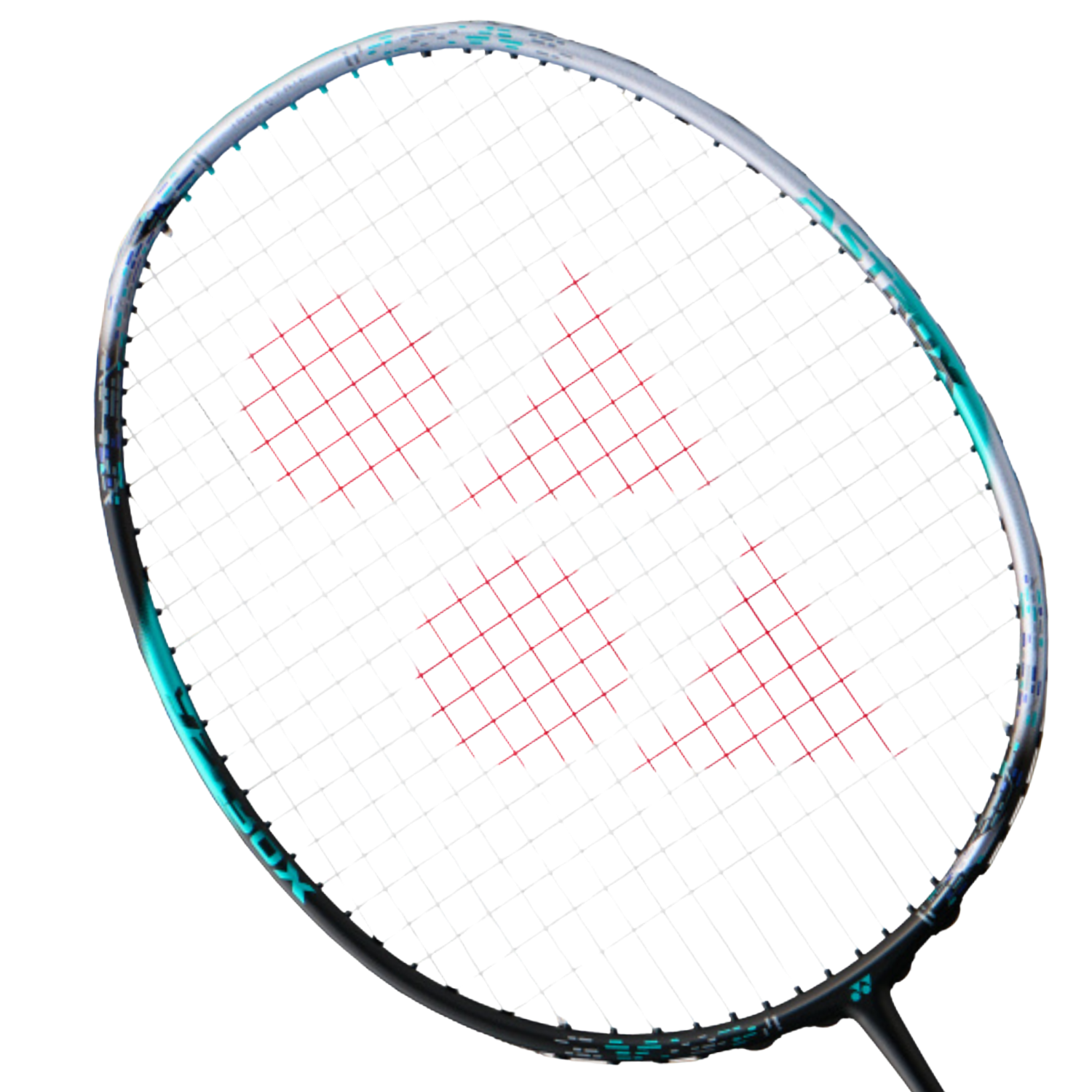
The string is the only part of your racket that touches the shuttle, yet most players spend hundreds on a frame and never think about what goes in it. Get the string and tension right and a mid-range racket will outperform a flagship strung badly. This guide, from the Central Sports stringing team — official retailer of the Yonex All England Championships — covers everything you need to choose confidently.
Why string and tension matter more than the racket
Your frame sets the ceiling; the string decides how much of it you reach. String choice controls three things you feel on every shot: repulsion (how much the bed springs the shuttle back for power), control (how predictably the shuttle leaves the face), and feel and durability. Tension trades these against each other. There is no single best setup — only the best setup for you, and it changes as you improve.
Understanding tension: the core trade-off
Lower tension (18–22 lbs) gives a trampoline effect: the bed flexes more and returns more energy, so you get more power for less effort and a larger, more forgiving sweet spot. The trade-off is a little less control. This is the right starting point for beginners and most recreational players.
Higher tension (24–30+ lbs) gives a firmer, flatter bed: shorter contact time, so the shuttle goes exactly where you aim — more control and a crisper feel — but a smaller sweet spot and you must generate your own power. Only players with a fast, developed swing benefit.
The counter-intuitive truth most players get wrong: higher tension does not mean more power. It means more control at the cost of power, and it only rewards a swing fast enough to drive the shuttle without help from the string. As a guide, the effective sweet spot shrinks from roughly 10 cm² at around 22 lbs to as little as 4 cm² above 28 lbs — which is why high tension punishes anything but clean contact.
Recommended tension by level
| Player level | Recommended tension | Why |
|---|---|---|
| Beginner / casual | 18–21 lbs | Maximum power and forgiveness while technique develops |
| Improver / regular club | 22–24 lbs | Balanced power and control as swing speed increases |
| Intermediate / competitive club | 24–26 lbs | Control-led, still enough repulsion for fast rallies |
| Advanced / county+ | 26–28 lbs | Precision and shot-making with a fast swing |
| Elite / professional | 28–32+ lbs | Pure control; power comes entirely from technique |
Always check your racket's maximum recommended tension, printed on the frame throat (commonly 24–30 lbs). Exceeding it risks cracking the frame and usually voids the warranty. Browse our full range and let our team string to your spec at Badminton Strings & Restringing.
How your playing style and conditions affect tension
Level is only half the picture. Aggressive singles players and back-court smashers who trust their technique tend to favour higher tension for the pinpoint control needed to place a steep smash. Doubles specialists who live at the net and defend fast drives often prefer a slightly lower tension for quick repulsion and reaction speed. Conditions matter too: strings feel stiffer and snap more easily in cold UK sports halls, so many players drop a pound or two over winter. Your racket balance interacts with tension as well — a head-heavy Astrox at high tension is a demanding combination, while a head-light Nanoflare at mid tension stays fast and forgiving.
String gauge (thickness): power vs durability
Gauge is the string's diameter in millimetres. Thinner gives more repulsion and feel but breaks sooner; thicker is more durable but slightly duller. Roughly: 0.61–0.65 mm is the most durable (best for hard hitters), 0.66–0.68 mm is the sensible all-rounder, and thinner strings suit attacking players chasing repulsion. If you break strings often, a thicker gauge saves money faster than dropping tension.
Choosing a string by what you want
Power and a big sweet spot: Yonex BG65 / BG65 Titanium — durable, forgiving, the UK's most popular club string. Repulsion and speed: Yonex Aerobite / BG80 / Nanogy 98 — thinner and springier for attacking players. Control and touch: Yonex Nanogy 95 / Exbolt 63 — crisp and precise. All-round durability on a budget: Yonex BG65 or Victor VBS-63.
Our recommended badminton strings
Five in-stock strings our team fits every week, matched to the tension and style they suit best:
- Yonex BG65 (10m Set) — the UK's most-fitted all-rounder. Durable, dependable and forgiving; ideal for beginners and club players around 22–25 lbs.
- Yonex Exbolt 65 (10m Set) — a modern all-round string that holds higher tension well, giving improvers a crisp, controlled response.
- Yonex BG80 Power (10m Set) — a repulsion-heavy favourite for attacking players wanting extra smash power at mid-to-high tension.
- Yonex Aerobite Hybrid (10m Set) — a hybrid prized for control and repeatable feel, popular with net-focused doubles players.
- Yonex BG66 Ultimax (200m Reel) — a thin, high-repulsion string for advanced players chasing speed and sound; the reel suits clubs and regular stringers.
Compare the full line-up in our badminton strings range.
How often should you restring?
The rule of thumb: restring as many times per year as you play per week. Play three times a week? Restring roughly three times a year — even if the string hasn't snapped. String loses tension continuously from the moment it's fitted; a bed that's held for six months has gone dead and is quietly costing you power and control. Every racket bought from us comes with a free professional restring, fitted to your exact tension on calibrated electronic machines.
Frequently asked questions
What tension should a beginner use? 18–21 lbs — the most power and the largest sweet spot while you develop swing speed.
Does higher tension give more power? No. Higher tension gives more control but less power; power at high tension must come from your own technique.
What tension for doubles vs singles? Many doubles players go 1–2 lbs higher for faster flat drives; singles players often prefer slightly lower tension for effortless clears. It's personal preference, not a rule.
How long does badminton string last? From a single session (hard hitters, thin string) to several months. Restring the number of times per year that you play per week, regardless of breakage.
Choosing your racket too? Read our guide to choosing a badminton racket, or explore badminton rackets with free expert restringing.